Fiber Optic Testing Explained: How to Test Fiber Optic Cable Using the Right Equipment
Modern businesses depend on high-speed, reliable fiber optic networks to support communication, cloud applications, security systems, and data transmission. Whether you’re installing a new network in a commercial building, upgrading a data center, or validating government infrastructure, proper fiber optic testing in Maryland is essential to ensure optimal performance and long-term reliability.
Testing verifies that fiber links meet design specifications, identifies potential issues before they impact operations, and provides the documentation required for project acceptance and closeout. Industry-standard testing methods such as Optical Loss Test Set (OLTS) testing and Optical Time Domain Reflectometer (OTDR) testing help network owners confirm that their infrastructure is functioning as intended.
In this guide, we’ll explain fiber-optic testing, discuss the equipment used, and walk through how to test fiber-optic cable effectively.
Is Your Fiber Network Performing at Its Peak?
Faulty splices, dirty connectors, and excessive loss can cripple your business operations. Let ClearPath ICT validate your infrastructure with comprehensive testing across Maryland, DC, and Virginia.
What Is Fiber Optic Testing?
Definition of Fiber Optic Testing
Fiber optic testing is the process of evaluating fiber cabling infrastructure to verify signal transmission quality, identify faults, measure loss, and certify network performance.
Why Fiber Testing Is Critical for Network Performance
Even a properly installed fiber network can experience performance issues caused by connector contamination, excessive bends, poor splices, or installation errors. Comprehensive fiber optic testing helps detect these issues before they affect users.
Common Applications for Fiber Testing
Fiber testing is commonly performed in:
- Commercial office buildings
- Data centers
- Government facilities
- Enterprise campuses
- Healthcare institutions
- Educational facilities
- Telecommunications infrastructure
Organizations throughout Maryland rely on professional testing services to ensure their networks meet industry standards and operational requirements.
Why Optical Fiber Cable Testing Matters
Identifying Signal Loss
Signal loss can reduce network performance and cause communication failures. Proper optical fiber cable testing in Maryland helps identify excessive attenuation before systems go live.
Verifying Installation Quality
Testing confirms that cables, connectors, and splices have been installed correctly and meet manufacturer specifications.
Meeting Industry Standards
Industry standards such as TIA, ANSI, and ISO require certification testing for many network installations. Compliance helps ensure network reliability and warranty eligibility.
Supporting Project Closeout Documentation
Many commercial and government projects require detailed test reports as part of final acceptance. Proper documentation demonstrates that the installed fiber infrastructure meets design requirements.
How to Test Fiber Optic Cable
Understanding how to test fiber optic cable in Maryland involves multiple testing procedures designed to validate different aspects of network performance.
Visual Inspection
Technicians begin by visually inspecting connectors and fiber end faces for contamination, scratches, cracks, or physical damage.
Continuity Testing
Continuity testing verifies that the fiber path is complete and correctly connected from end to end.
Insertion Loss Testing
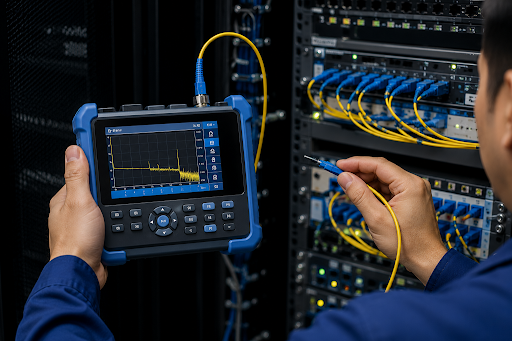
Insertion loss testing measures the amount of signal loss occurring across a fiber link. This is one of the most important certification tests for newly installed fiber infrastructure.
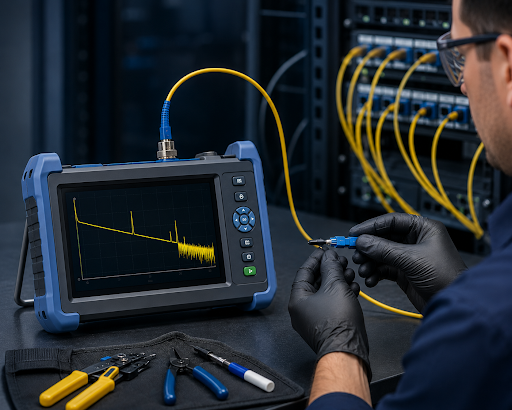
An Optical Time Domain Reflectometer (OTDR) sends light pulses through the fiber and analyzes reflections to locate:
- Fiber breaks
- Poor splices
- Connector issues
- Excessive bends
- Distance measurements
Certification Testing
Certification testing compares measured performance against industry standards and project specifications.
Documentation and Reporting
Professional testing includes detailed reporting that records test results, identifies issues, and provides evidence of compliance for project stakeholders.
Essential Fiber Optic Test Equipment
Accurate results require specialized fiber optic test equipment in Maryland designed specifically for fiber network certification and troubleshooting.
Optical Loss Test Set (OLTS)
OLTS equipment measures insertion loss and overall link performance. It is widely used for certification testing.
Optical Time Domain Reflectometer (OTDR)
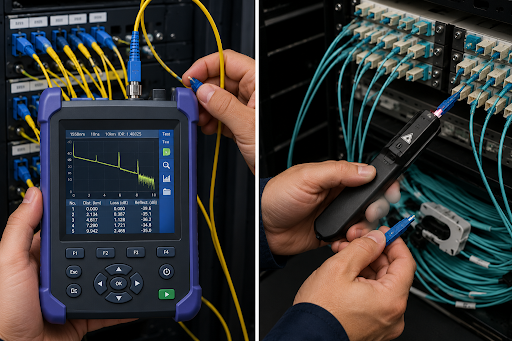
OTDR devices provide detailed analysis of fiber links and identify the location of faults or performance issues.
Visual Fault Locator (VFL)
A VFL emits visible laser light through fiber strands to help technicians locate breaks, bends, and connection problems.
Fiber Inspection Microscope
Inspection microscopes allow technicians to examine connector end faces and identify contamination or damage that may affect performance.
Power Meter and Light Source
Power meters and light sources work together to measure signal strength and attenuation across fiber links.
Using the correct fiber optic test equipment is essential for obtaining accurate and repeatable test results.
Choosing the Right Fiber Optic Cable Tester
Selecting the appropriate fiber optic cable tester in Maryland depends on the testing requirements and network environment.
Features to Look For
Important features include:
- Industry-standard certification capabilities
- High measurement accuracy
- Comprehensive reporting functions
- Ease of use
- Multi-wavelength testing support
Accuracy and Certification Requirements
Projects requiring compliance documentation should use equipment capable of meeting current TIA and ISO testing standards.
Testing Single-Mode vs Multi-Mode Fiber
Different fiber types require different testing procedures and equipment configurations. Ensure the tester supports the fiber type being evaluated.
Portable vs Advanced Testing Devices
Portable testers are useful for field troubleshooting, while advanced certification equipment provides more comprehensive analysis and reporting.
Common Problems Detected During Fiber Optic Testing
Testing frequently reveals issues that can impact network performance.
Excessive Insertion Loss
Higher-than-expected attenuation often indicates connector contamination, poor splices, or damaged cable segments.
Dirty Connectors
Connector contamination is one of the most common causes of fiber network failures.
Fiber Breaks and Bends
Physical damage or excessive bending can significantly reduce signal transmission quality.
Splicing Issues
Improperly completed splices create signal loss and network instability.
Incorrect Installation Practices
Improper routing, cable tension, or termination methods can affect network performance and reliability.
Fiber Optic Testing Best Practices
Follow Industry Standards
Always perform testing according to recognized TIA, ANSI, and ISO standards.
Clean and Inspect Connectors
Connector cleaning should be performed before every test to prevent inaccurate results.
Test Before and After Installation
Pre-installation and post-installation testing help identify issues early and verify final performance.
Maintain Detailed Documentation
Accurate records support troubleshooting, maintenance, and project closeout requirements.
Use Certified Testing Equipment
Calibrated and certified testing equipment ensures accurate and defensible results.
OTDR vs OLTS Testing
Both testing methods play important roles in network validation.
What OTDR Testing Measures
OTDR testing identifies:
- Fiber length
- Fault locations
- Connector performance
- Splice quality
- Reflection events
What OLTS Testing Measures
OLTS testing measures:
- End-to-end insertion loss
- Link performance
- Certification compliance
When Each Test Should Be Used
OTDR testing is ideal for troubleshooting and fault location, while OLTS testing is the preferred method for certification.
Why Most Certification Projects Require Both
Many professional fiber certification projects require both OTDR and OLTS testing to provide complete validation of network performance.
When Should Fiber Optic Networks Be Tested?
Fiber networks should be tested during:
- New installations
- Network upgrades
- Troubleshooting connectivity issues
- Data center deployments
- Government infrastructure projects
- Commercial construction projects
- Preventive maintenance programs
Routine testing helps identify potential issues before they result in costly downtime.
Frequently Asked Questions (FAQ’s)
What is the purpose of fiber optic testing?
Fiber optic testing verifies network performance, identifies faults, measures signal loss, and ensures compliance with industry standards.
What equipment is used for optical fiber cable testing?
Common equipment includes OTDRs, OLTS units, power meters, light sources, visual fault locators, and inspection microscopes.
How do you test a fiber optic cable?
Testing typically involves visual inspection, continuity verification, insertion loss measurement, OTDR analysis, and certification reporting.
What is the best fiber optic cable tester?
The best tester depends on the application, but professional certification projects often require advanced OLTS and OTDR equipment.
What is the difference between OTDR and OLTS testing?
OTDR testing locates faults and analyzes fiber events, while OLTS testing measures end-to-end signal loss and certification compliance.
How often should fiber optic networks be tested?
Networks should be tested after installation, during upgrades, when troubleshooting issues, and as part of preventive maintenance programs.
Conclusion
Reliable fiber networks require thorough validation before they can support mission-critical operations. Professional fiber optic testing in Maryland helps identify installation issues, verify network performance, and ensure compliance with industry standards.
From understanding how to test fiber optic cable to selecting the right fiber optic cable tester and fiber optic test equipment, proper testing procedures are essential for maintaining network reliability and performance.
Whether you’re deploying fiber in a commercial building, data center, or government facility, comprehensive testing ensures your infrastructure delivers the speed, reliability, and scalability your organization requires.
Need Professional Fiber Optic Testing and Certification in Maryland?
ClearPath ICT provides professional fiber optic testing and certification services throughout Maryland. Our experienced technicians perform OLTS and OTDR testing, network validation, troubleshooting, certified reporting, and project closeout documentation for commercial, enterprise, government, and data center environments.
Contact ClearPath ICT today to ensure your fiber optic infrastructure meets performance requirements and certification standards.